Specifications
- Common Name: Culver’s Root
- Type: Herbaceous perennial
- Family: Plantaginaceae
- Native Range: Northeastern North America
- Zone: 3 to 8
- Height: 4.00 to 7.00 feet
- Spread: 2.00 to 4.00 feet
- Bloom Time: June to August
- Bloom Description: White to pale blue
- Sun: Full sun
- Water: Medium to wet
- Maintenance: Low
- Suggested Use: Rain Garden
- Flower: Showy
- Attracts: Butterflies
- Tolerate: Wet Soil
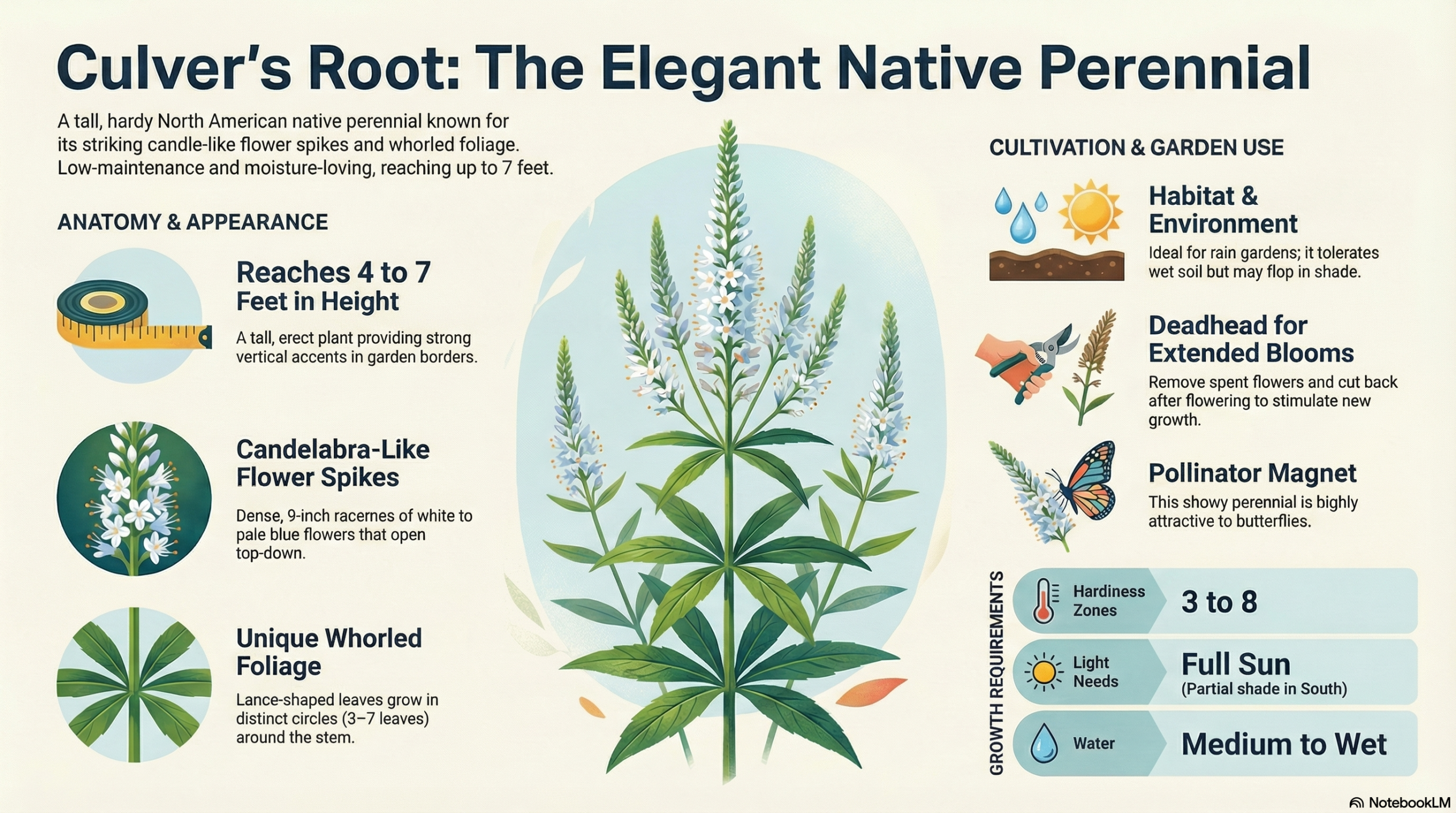
Culture: Easily grown in average, medium to wet, well-drained soil in full sun. Tolerates light shade (and appreciates some afternoon shade in the deep South), but tends to flop and require support if grown in too much shade. Soils should not be allowed to dry out. Usually takes several years to establish itself in the garden. Deadhead spent racemes to extend bloom period. Cut back plants after flowering to basal growth to stimulate new foliage growth and possible late summer or fall bloom.
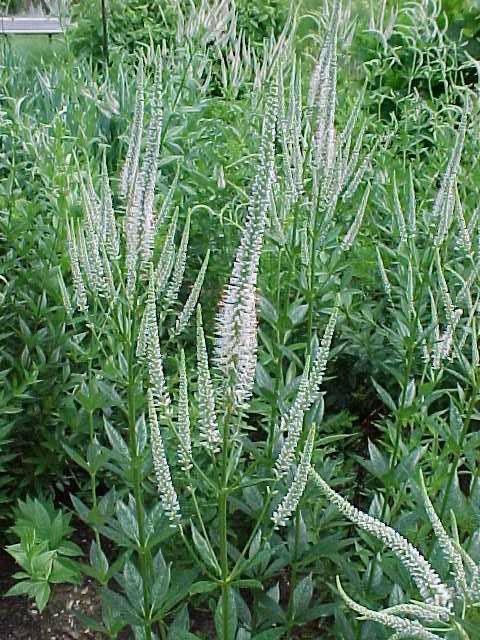
Noteworthy Characteristics: Veronicastrum virginicum, commonly called Culver’s root, is a large, erect, Missouri native perennial which occurs in open woods, thickets and moist meadows and prairies throughout the State. Typically reaches 3-7′ tall when in bloom. Resembles a large veronica, except its lance-shaped leaves are in whorls (3-7 leaves per whorl) on the stems rather than opposite. Dense, slender, 9″ long spikes (racemes) of tiny, tube-like, white to pale blue flowers open from the top down in late spring to early summer atop strong, upright stems. Bloom can extend well into the summer. Smaller, branching, erect, lateral racemes give plant a candelabra-like effect when in full bloom. Root has been used medicinally as a cathartic.
Genus name comes from the genus name Veronica (Christian legend claims Saint Veronica gave her veil to Christ to wipe his forehead while he was carrying the cross to Calvary) and astrum meaning star or incomplete resemblance.
Specific epithet means of Virginia.
Problems: No serious insect or disease problems. Seldom needs staking, but may need support if grown in too much shade.
Garden Uses: Tall flower spikes provide a strong accent and good vertical height for borders, cottage gardens or wild gardens.