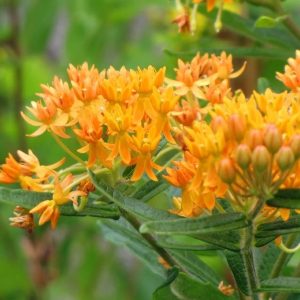
Specifications
- Common Name: ironweed
- Type: Herbaceous perennial
- Family: Asteraceae
- Native Range: Central North America
- Zone: 4 to 9
- Height: 3.00 to 5.00 feet
- Spread: 3.00 to 4.00 feet
- Bloom Time: July to August
- Bloom Description: Magenta purple
- Sun: Full sun
- Water: Medium to wet
- Maintenance: Low
- Suggested Use: Naturalize, Rain Garden
- Flower: Showy
- Attracts:
- Tolerate: Deer, Wet Soil
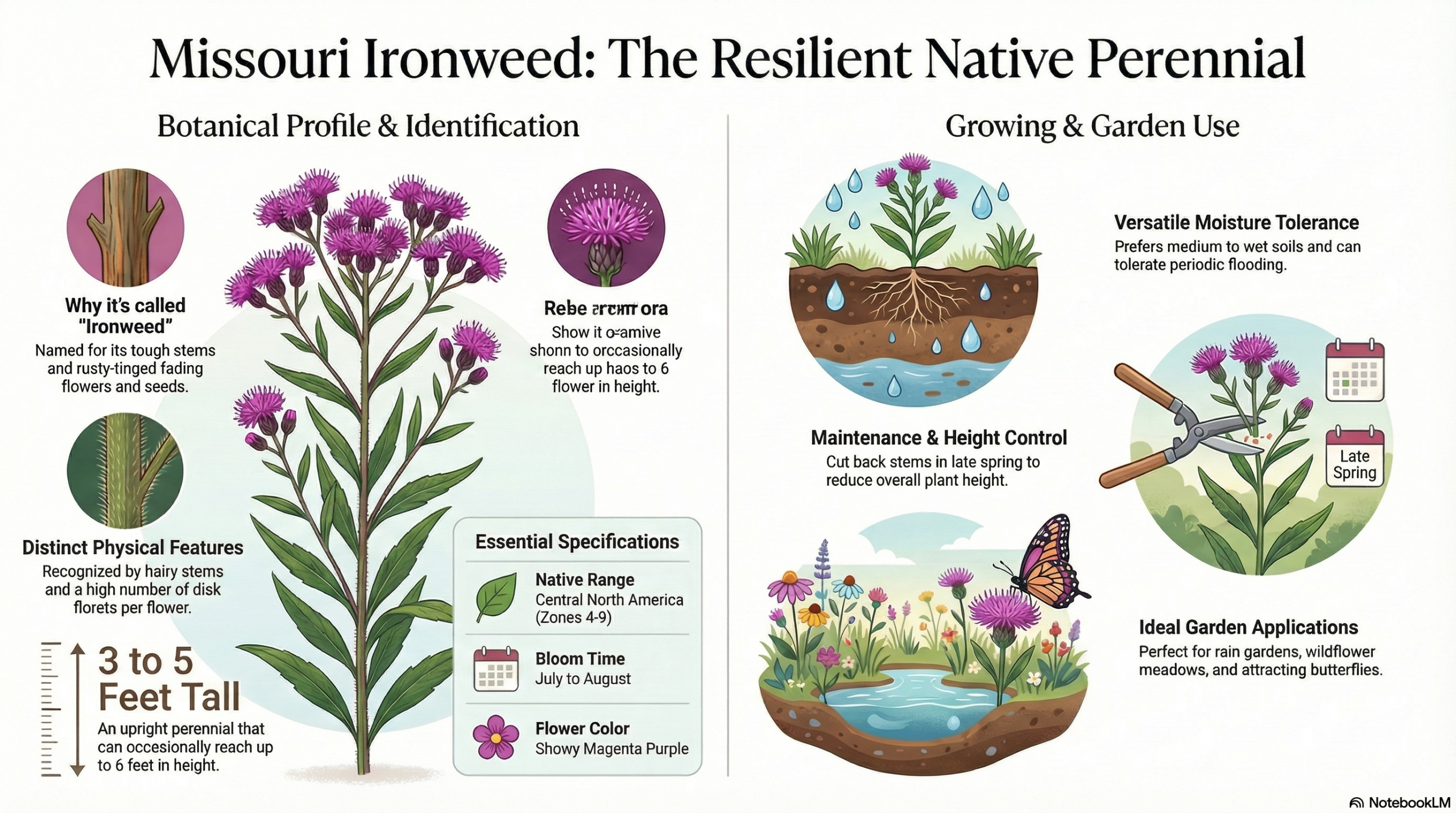
Culture: Easily grown in average, medium to wet soils in full sun. Although it is mostly seen growing in the wild in moist soils, with tolerance for periodic flooding, it performs quite well in cultivation in average garden soils. Plants generally grow taller in moist soils. Overall plant height may be reduced by cutting back stems in late spring. Easily grown from seed. Remove flower heads before seed develops to avoid any unwanted self-seeding. This species of ironweed tends to hybridize with some other species of native ironweeds, which can sometimes complicate plant identification.
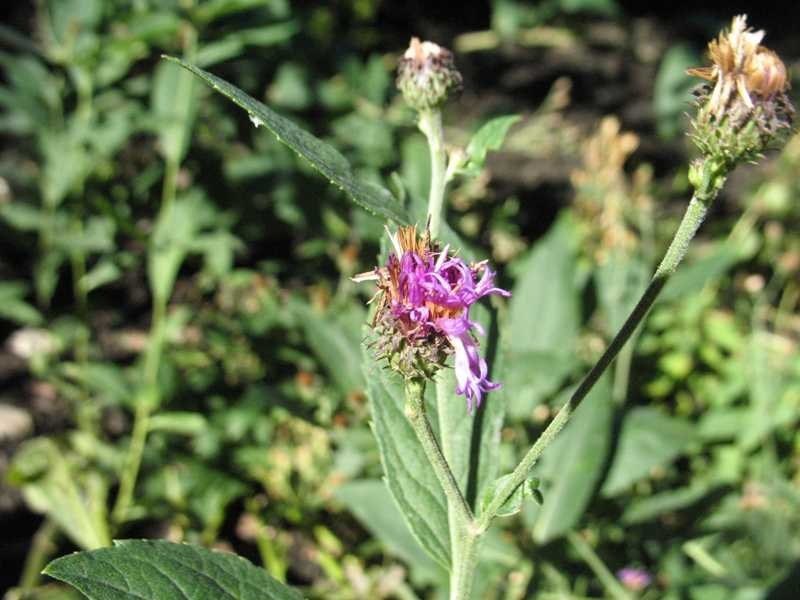
Noteworthy Characteristics: Vernonia missurica is best distinguished from other ironweeds by the usually greater number of disk florets per flower and by the hairy stems and leaf undersides. It is native from southern Ontario, Michigan and Nebraska south to Alabama and Texas. In Missouri, it typically occurs in moist open ground along streams, wooded swamps, low meadows, prairies, fields and waste places throughout most of the State except the western Ozarks and unglaciated prairie regions (Steyermark). This is an upright perennial that typically grows 3–5’ (less frequently to 6’) tall on stiff, leafy stems which branch at the top. Narrow, lance-shaped to narrow-ovate leaves (to 7” long) have serrate margins. Composite flowers, each with dense, fluffy, magenta purple disks (rays absent), bloom in corymbose cymes from late summer into fall. Flowers give way to rusty seed clusters. The source of the common name for vernonias has been variably attributed to certain “iron-like” plant qualities including tough stems, rusty-tinged fading flowers and rusty colored seeds. Notwithstanding its toughness, the plant is, with the exception of its attractive flowers, a somewhat unexceptional ornamental. Flowers are very attractive to butterflies. Genus name honors William Vernon (d. c. 1711), English botanist who collected in Maryland in 1698. Specific epithet is in reference to the Missouri River.
Problems: No serious insect or disease problems.
Garden Uses: Naturalize in cottage gardens, wildflower meadows, prairies or native plant gardens. Also effective as a background plant for borders.