Specifications
- Common Name: longspike tridens
- Type: Ornamental grass
- Family: Poaceae
- Native Range: Central North America
- Zone: 5 to 9
- Height: 2.00 to 4.00 feet
- Spread: 1.50 to 2.50 feet
- Bloom Time: July to October
- Bloom Description: Brown tinged with purple
- Sun: Full sun
- Water: Dry to medium
- Maintenance: Low
- Suggested Use: Naturalize
- Flower: Showy
- Attracts:
- Tolerate: Drought, Erosion, Dry Soil, Black Walnut, Urban Conditions
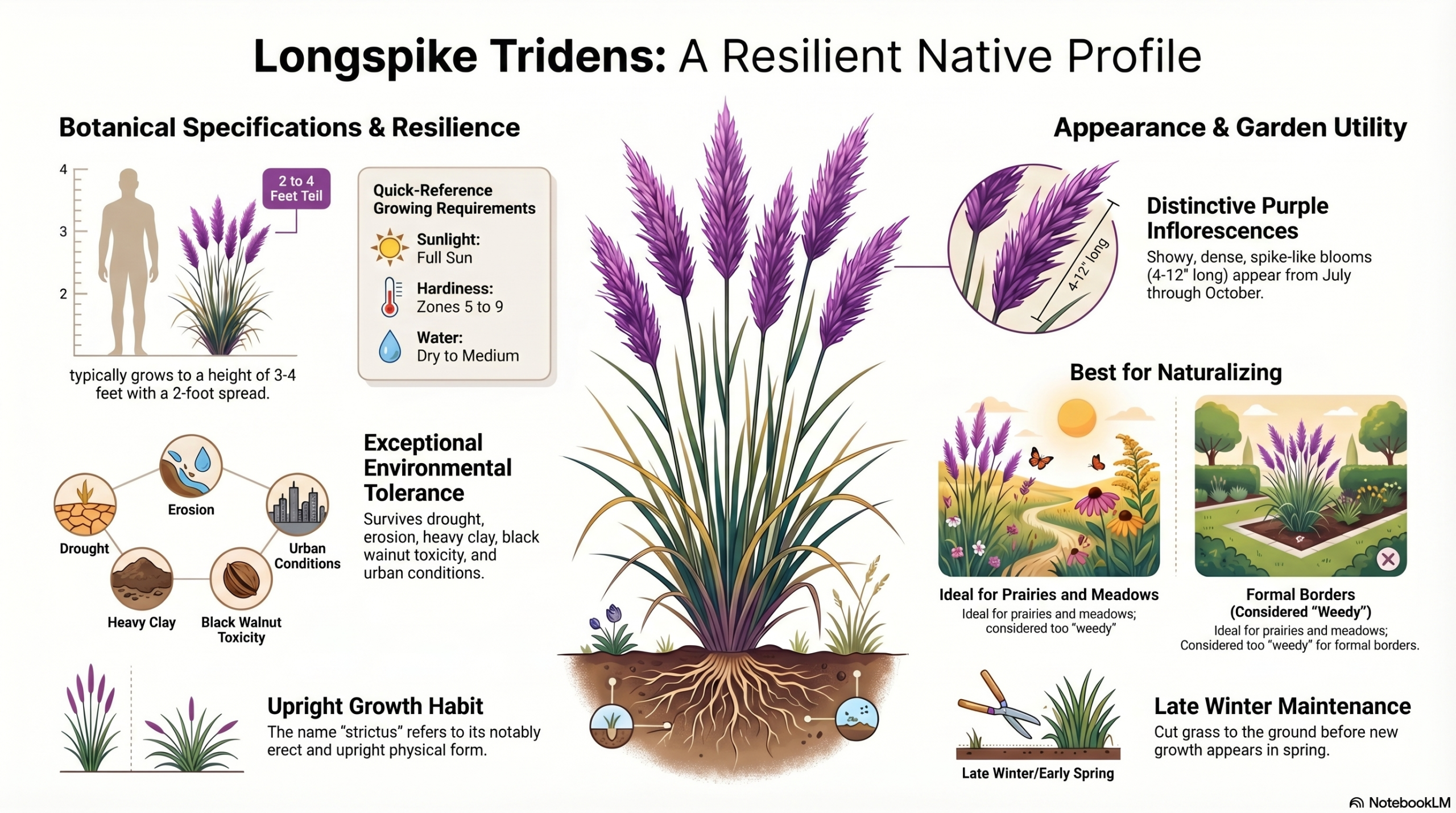
Culture: Easily grown in average, dry to medium, well-drained soils in full sun. Tolerates wide range soils including heavy clay. Tolerates drought. Cut to the ground in late winter before new growth appears. May self-seed in optimum growing conditions.
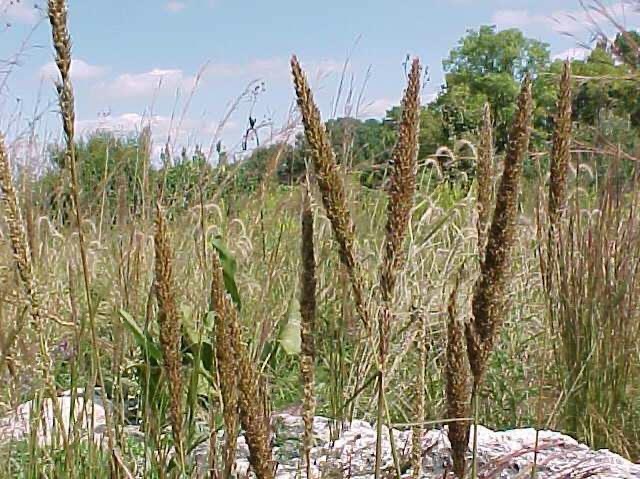
Noteworthy Characteristics: Tridens strictus, commonly called longspike tridens, is a densely tufted, Missouri native grass which occurs in both moist and dry soils on open ground, prairies, fields, waste areas, ditches and roadsides in the far southern part of the State. Typically grows 3-4′ tall. Thin blades (3/8″ wide). Brownish to rose-purplish flowers appear in mid-July in slender, dense, spike-like inflorescences (4-12″ long) which persist well into October. Common name refers to the spike-like panicles which easily distinguish this grass from Tridens flavus which has loose, wide-branching panicles.
Specific epithet means erect or upright.
Problems: No serious insect or disease problems.
Garden Uses: Prairies, meadows, native plant gardens, wild or naturalized areas. Other than the purple-tinged flower spikes, this somewhat weedy grass has very little ornamental value and is not usually considered appropriate for borders or other formal perennial plantings.