Showy coneflower – Rudbeckia fulgida

Specifications
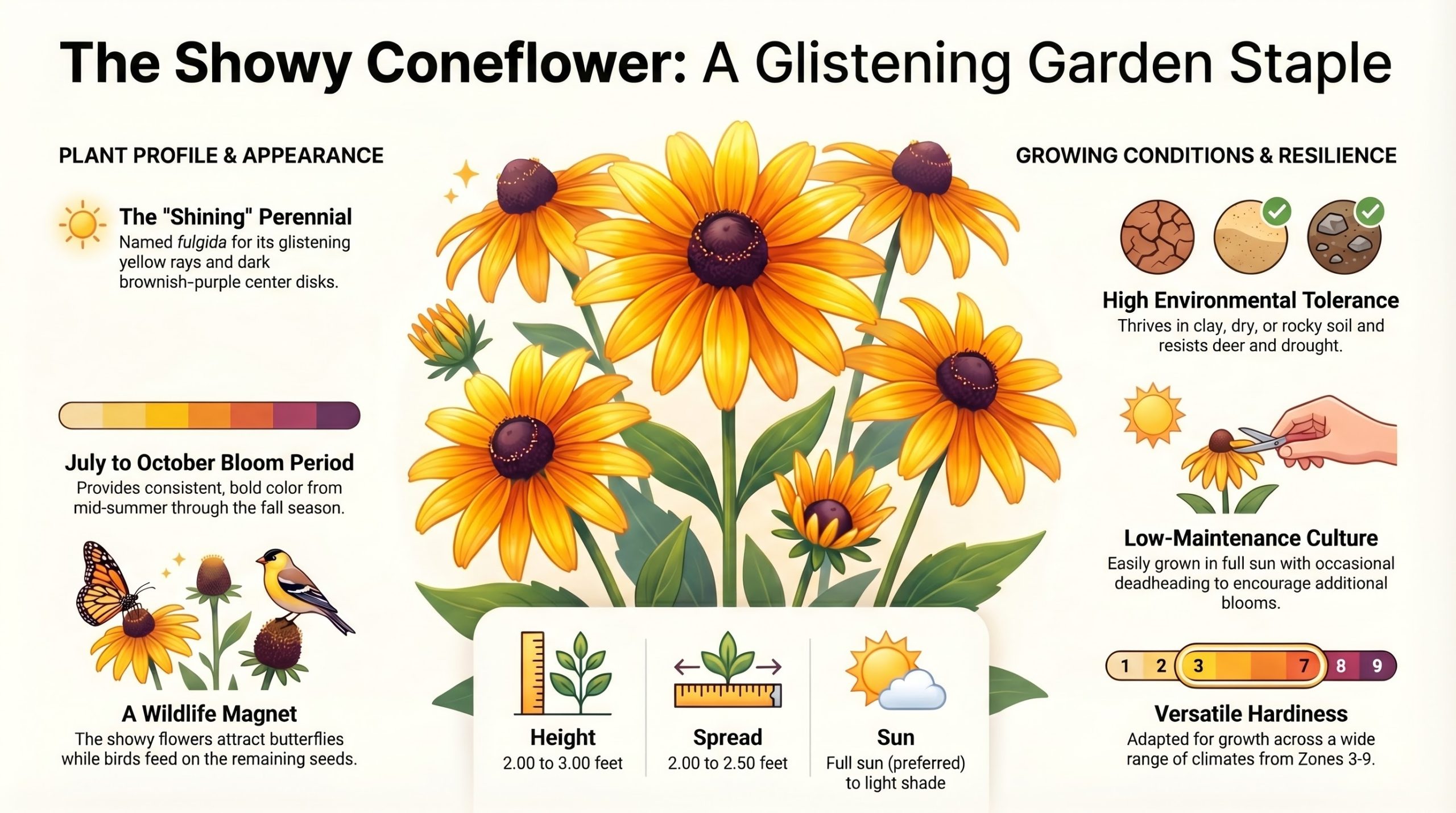
  • Common Name: orange coneflower
  • Type: Herbaceous perennial
  • Family: Asteraceae
  • Native Range: Southeastern United States
  • Zone: 3 to 9
  • Height: 2.00 to 3.00 feet
  • Spread: 2.00 to 2.50 feet
  • Bloom Time: July to October
  • Bloom Description: Orange / yellow
  • Sun: Full sun
  • Water: Dry to medium
  • Maintenance: Low
  • Suggested Use: Naturalize, Rain Garden
  • Flower: Showy, Good Cut, Good Dried
  • Attracts: Birds, Butterflies
  • Tolerate: Deer, Drought, Clay Soil, Dry Soil, Shallow-Rocky Soil, Urban Conditions

Culture: Easily grown in dry to medium, organically rich to average, well-drained soils in full sun. Best bloom occurs in full sun, although plants will tolerate some light shade. Plants prefer consistent moisture throughout the growing season, with some tolerance for drought once established. Tolerant of a wide range of growing conditions including dry soil, clay soil, and urban environments. Good air circulation is appreciated. Deadhead spent flowers to encourage additional bloom. Plants slowly spread in the garden by rhizomes.

Noteworthy Characteristics: Rudbeckia fulgida is a herbaceous perennial native to the eastern United States which occurs in both dry and moist soils in open woods, glades and thickets. An upright, rhizomatous, clump-forming, free-blooming coneflower which typically grows to 3′ tall, often forming colonies in the wild. Features daisy-like flowers (to 2.5″ across) with yellow rays and brownish-purple center disks. Prolific bloom production over a long mid-summer to fall bloom period. Oblong to lanceolate, medium green foliage. Good cut flower. The flowers are attractive to butterflies and other insect pollinators. Birds eat the seeds.

Genus name honors Olof Rudbeck (1630-1702) Swedish botanist and founder of the Uppsala Botanic Garden in Sweden where Carl Linnaeus was professor of botany.

The specific epithet fulgida means “shining” or “glistening”.

The species is infrequently sold by nurseries because of the excellent varieties and cultivars available thereunder (e.g., see ‘Goldsturm’ and ‘Viette’s Little Suzy’).

Problems: No serious insect or disease problems, but aphids, powdery mildew, downy mildew, aster yellows, and leaf spot diseases can appear. Deer tend to avoid this plant.

Garden Uses: Mass in bold drifts in the perennial border, cottage garden, meadow, rain garden, native plant garden or naturalized area. Provides excellent bloom and color in the late summer. Good cut flower.

About

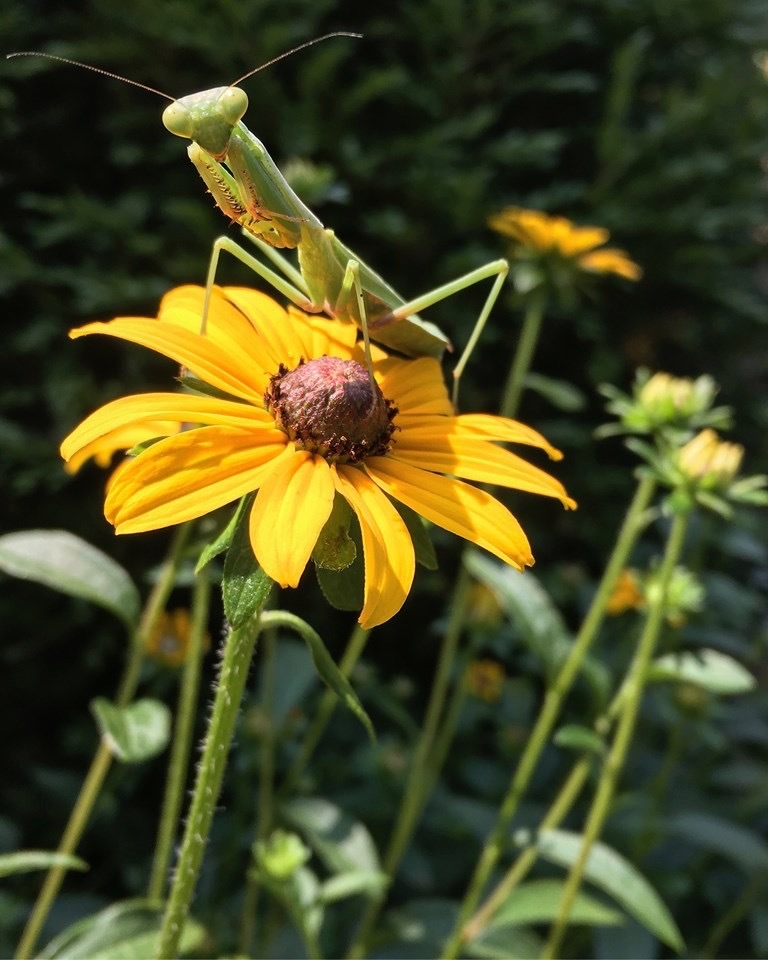
Orange Coneflower will be the midsummer focal point in any landscape with its abundance of bold tangerine-orange flowers. Cheery petals surround chocolate-brown centers, forming brilliant buttons that festoon the neat 2-3′ mounded plant from July through September. The blooms are so plentiful, they nearly block the forest-green foliage from view! This is one of our favorite species to recommend for any planting because it maintains its structure and looks good all season long; it also provides great support to local pollinators and wildlife!

Rudbeckia fulgida var. sullivantii grows best in full sun to light shade with moderate soil moisture. Young plants benefit from consistent moisture and good air circulation; once established, this species can tolerate drier conditions. Although the root structures are rhizomatous, this plant spreads in well-mannered mounds. If that bushy appearance gets too big, Orange Coneflower can easily be divided. The raspy, leathery leaves make this species deer and rabbit resistant.

Producing both nectar and pollen, this species supports a diverse number of minute pollinators including native bees and small butterflies. Little moth caterpillars like the Blackberry Looper and the Wavy-Lined Emerald will use this plant species as forage and a place of refuge. The Wavy-Lined Emerald is also known as a Camouflaged Looper because the caterpillars adhere small pieces of plant material to their bodies, helping them blend in with their environment. After the Orange Coneflower petals have dried out, songbirds will flock to devour the plentiful seed. Previously listed on our website as Rudbeckia fulgida, this scientific designation displays an incredible array of variability. The population in our production beds has since been dialed in as var. sullivantii. This naturally-occurring variety grows primarily around the Great Lakes region, with some populations further south along the Mississippi River.

Also commonly called Sullivant’s Coneflower, Showy Coneflower, Eastern Coneflower, and Shining Black-Eyed Susan.

Specifications
  • Seeds/Packet: 150
  • Seeds/Ounce: 25,000
  • Germination Code: C(60)
  • Life Cycle: Perennial
  • Sun Exposure: Full, Partial
  • Soil Moisture: Medium-Wet, Medium, Medium-Dry
  • Height: 3 feet
  • Bloom Time: July, August, September
  • Bloom Color: Orange
  • Advantages:
  • Plant Spacing: 1-2′
  • Catalog Code: RUD03F

Buy Now

Related Plants