Specifications
- Common Name: smooth aster
- Type: Herbaceous perennial
- Family: Asteraceae
- Native Range: North America
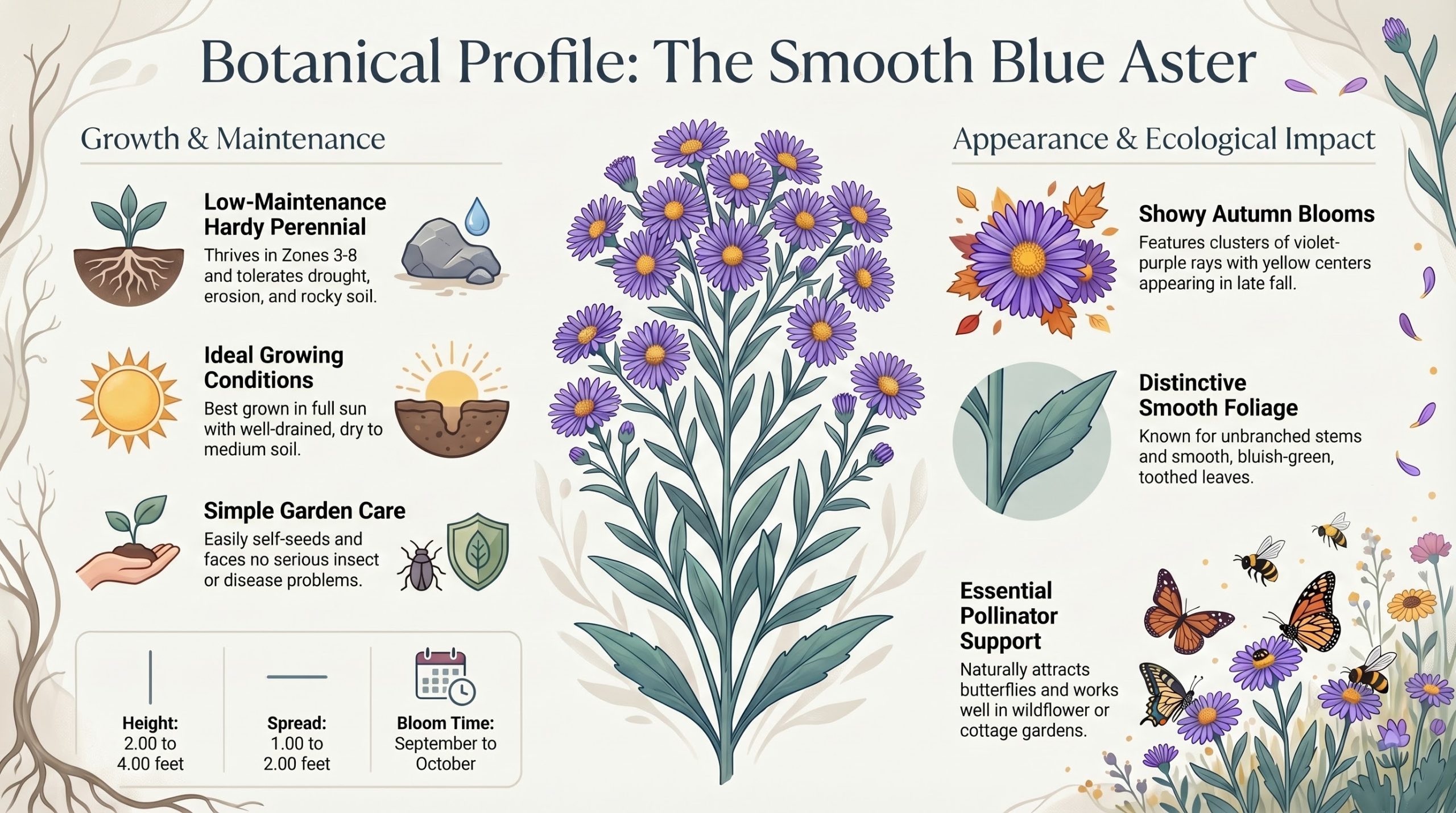
- Zone: 3 to 8
- Height: 2.00 to 4.00 feet
- Spread: 1.00 to 2.00 feet
- Bloom Time: September to October
- Bloom Description: Violet to purple rays and yellow centers
- Sun: Full sun
- Water: Dry to medium
- Maintenance: Low
- Suggested Use: Naturalize
- Flower: Showy
- Attracts: Butterflies
- Tolerate: Drought, Erosion, Dry Soil, Shallow-Rocky Soil
Culture: Easily grown in average, dry to medium, well-drained soil in full sun. Easily self-seeds.
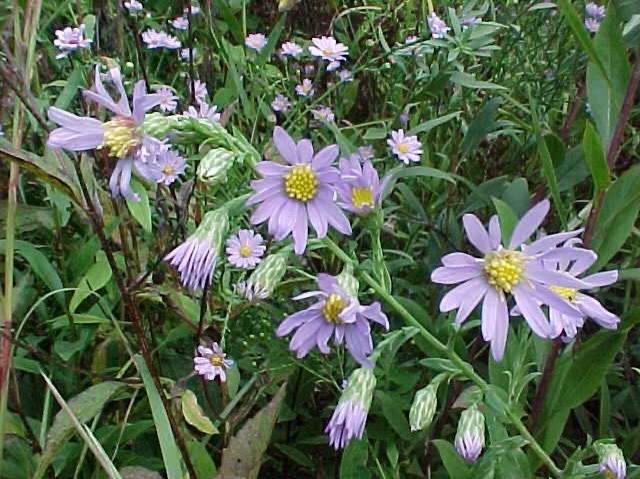
Noteworthy Characteristics: Symphyotrichum laeve, commonly called smooth aster, is a Missouri native that typically occurs in prairies, rocky glades, dry open woods, roadside banks and thickets. Stems are usually unbranched with variable, mostly toothed, smooth, bluish green foliage. Small flowers (.75 to 1.25″ across) with violet blue to purple (sometimes white) rays and yellow center disks appear in open, loose, panicle-like clusters in autumn. Attractive to butterflies.
Genus name comes from the Greek symph meaning coming together and trich meaning hair in possible reference to the flower anthers.
Specific epithet means smooth.
Problems: No serious insect or disease problems. May need staking.
Garden Uses: Late blooming perennial aster for the border, wildflower, native or cottage garden. Grows well with Helianthus and Solidago.