Specifications
- Common Name: grey-head coneflower
- Type: Herbaceous perennial
- Family: Asteraceae
- Native Range: Central North America
- Zone: 3 to 8
- Height: 3.00 to 5.00 feet
- Spread: 1.50 to 2.00 feet
- Bloom Time: June to August
- Bloom Description: Yellow
- Sun: Full sun
- Water: Medium
- Maintenance: Medium
- Suggested Use:
- Flower: Showy
- Attracts: Butterflies
- Tolerate: Drought, Clay Soil
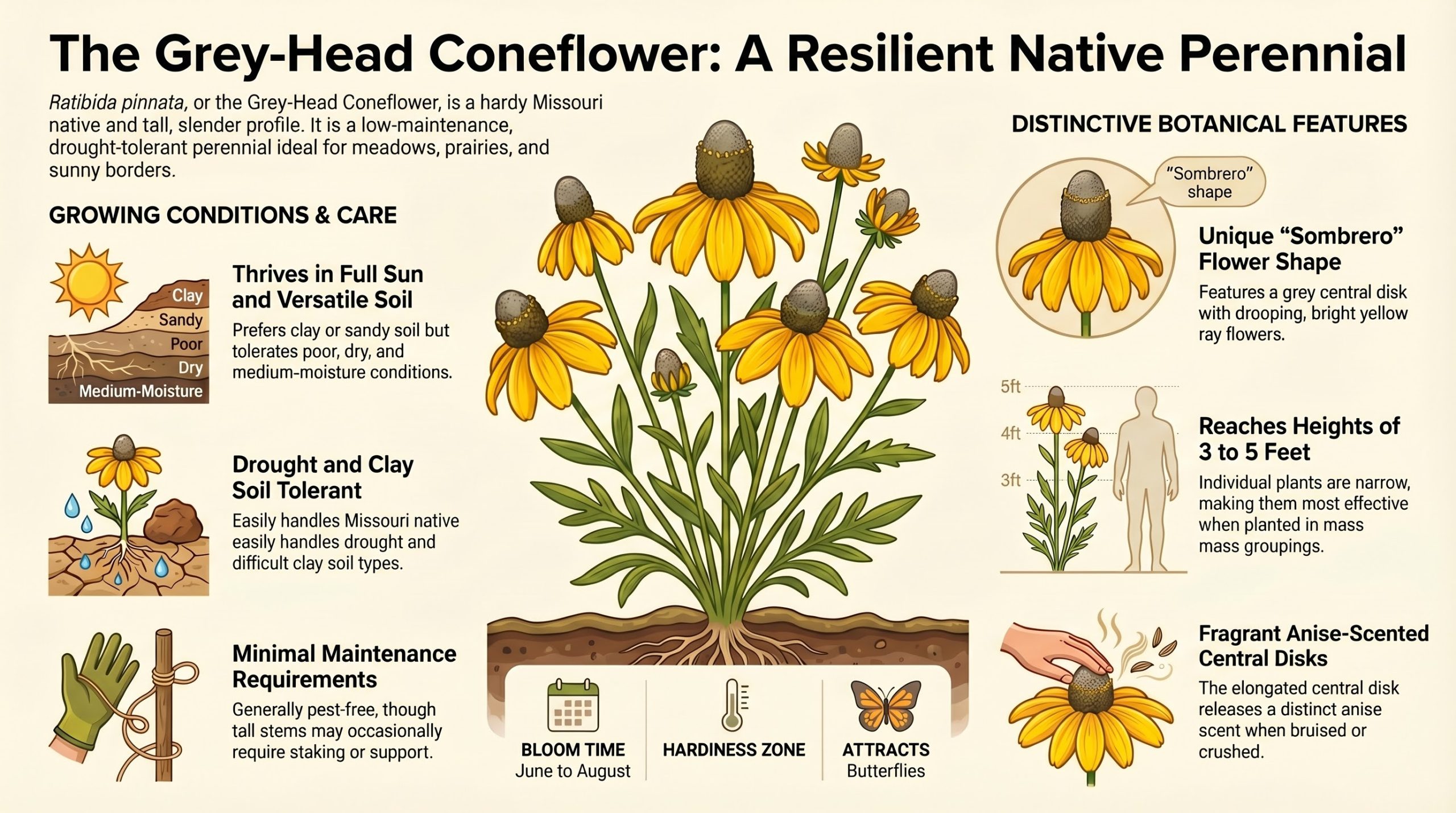
Culture: Grow in average, medium moisture, well-drained soil in full sun. Prefers clay or sandy soils. Tolerates poor, dry soils.
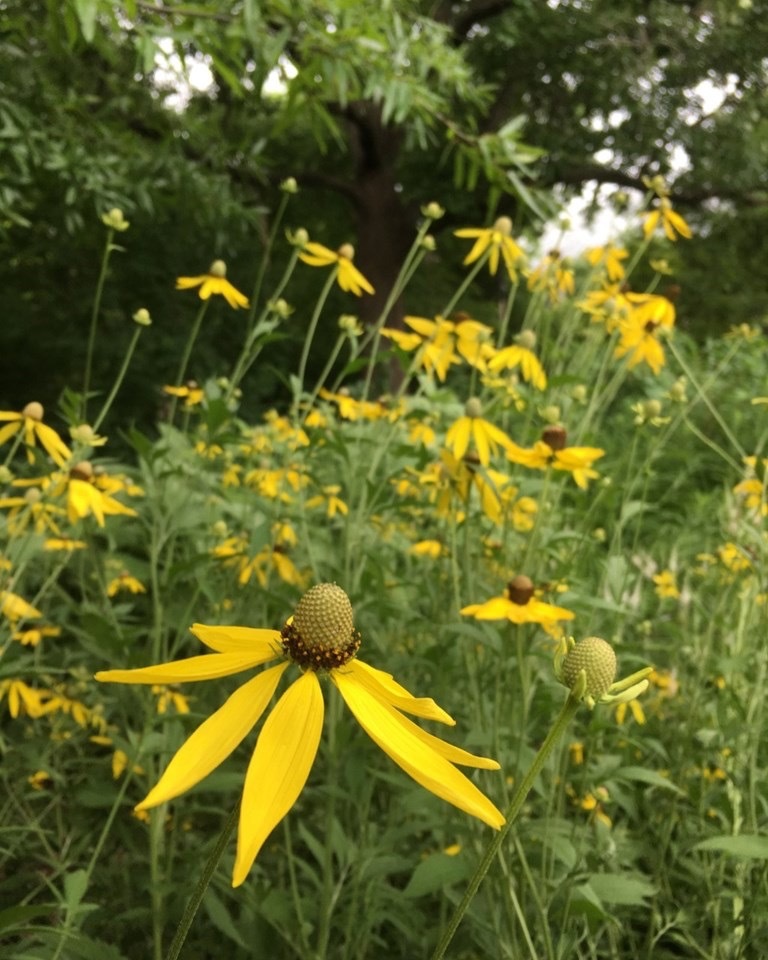
Noteworthy Characteristics: Ratibida pinnata, commonly called gray headed coneflower, is a Missouri native plant which typically occurs in dry woods, prairies and along railroad tracks and roads. A somewhat rough-looking plant that features pinnately divided leaves (to 5″ long) on stiff stems growing 3-5′ tall. The composite flowers have a dull-gray central disk in the shape of an elongated cylinder (1 inch long), somewhat resembling the crown of a slender sombrero. When bruised, the disk smells of anise. Attached to the bottom of the disk is a brim of 3-7, extremely reflexed (downward pointing), bright yellow ray flowers (to 3″ long). Long summer bloom period.
Genus name of uncertain origin.
Specific epithet is in reference to the pinnate leaves.
Problems: No serious insect or disease problems. May need staking or other support.
Garden Uses: Interesting plant for the sunny border, native plant garden, meadow or prairie. Best massed because individual plants are narrow and somewhat sparsely leafed.