Specifications
- Common Name: American boneset
- Type: Herbaceous perennial
- Family: Asteraceae
- Native Range: Southeastern United States
- Zone: 3 to 8
- Height: 4.00 to 6.00 feet
- Spread: 3.00 to 4.00 feet
- Bloom Time: July to September
- Bloom Description: White
- Sun: Full sun to part shade
- Water: Medium to wet
- Maintenance: Low
- Suggested Use: Rain Garden
- Flower: Showy, Good Cut, Good Dried
- Attracts: Butterflies
- Tolerate: Deer, Clay Soil, Wet Soil
Culture: Easily grown in average, medium to wet soils in full sun to part shade. Does well in both sandy and clay soils. Needs constant moisture. May flop and requires staking in rich, fertile soils.
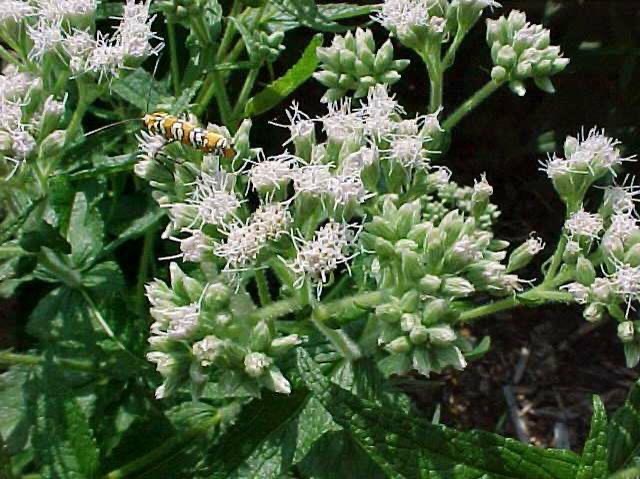
Noteworthy Characteristics: Eupatorium perfoliatum, commonly called boneset, is a large, hairy, clump-forming, Missouri native perennial which typically occurs in wet soils in low woods, thickets, stream banks, meadows and prairies throughout the State. Flat-topped clusters (compound corymbs) of small, fluffy, white flowers appear above the foliage in late summer to fall. Perfoliate foliage is quite distinctive: the bases of the pairs of wrinkled, opposite, lance-shaped, medium green leaves unite to surround the hairy stems (perfoliatum meaning through the foliage). Historically, boneset was commonly included in medical herb gardens and used as a folk medicine for treatment of flus, fevers, colds and a variety of other maladies. Though some authorities claim the name boneset refers to a former use of the plant to aid the healing process for broken bones, others claim that the name is in reference to the plant’s use as a diaphoretic in the treatment of an 18th century influenza called break bone fever. All parts of the plant are quite toxic and bitter. Also commonly called thoroughwort.
Genus name comes from the Greek name for these herbaceous and shrubby plants in honor of Mithridates VI Eupator, 132-63 B.C., King of Pontus, who reportedly discovered the medicinal uses for some Eupatorium species plants.
Specific epithet means perfoliate, having leaf bases that encircle the node, so that the stem apparently passes through it.
Problems: No serious insect or disease problems. Foliage may scorch if soils are allowed to dry out.
Garden Uses: Good size and late bloom for borders, native plant gardens, wildflower gardens, cottage gardens, woodland gardens, rain gardens, or banks of ponds or water gardens.