Specifications
- Common Name: Joe Pye weed
- Type: Herbaceous perennial
- Family: Asteraceae
- Native Range: North America
- Zone: 4 to 8
- Height: 4.00 to 7.00 feet
- Spread: 3.00 to 4.00 feet
- Bloom Time: July to September
- Bloom Description: Purple-pink
- Sun: Full sun
- Water: Medium to wet
- Maintenance: Low
- Suggested Use: Rain Garden
- Flower: Showy, Fragrant
- Attracts: Butterflies
- Tolerate: Deer, Clay Soil, Wet Soil
Culture: Easily grown in average, medium to wet soils in full sun. Tolerates some light afternoon shade, particularly in hot summer climates. Prefers moist, fertile, humusy soils which do not dry out. Cut plants to the ground in late winter.
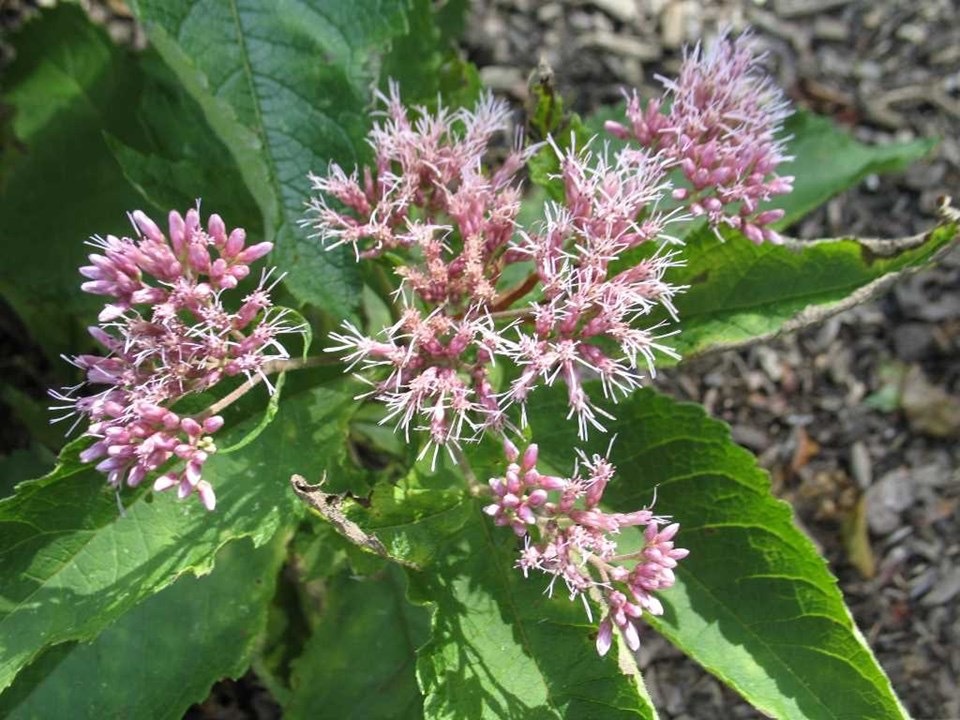
Noteworthy Characteristics: Eutrochium maculatum, commonly known as Joe Pye weed, is native to damp meadows, thickets and coastal areas in eastern North America. Plants typically grow 4–7’ tall on branched, purple-speckled stems clad with serrate, lance-shaped, medium green leaves (to 8” long) that typically appear in whorls of 3–6. Tiny, light to deep purple flowers in compound inflorescences bloom from mid-summer to early fall. Genus name is derived from the Greek words eu meaning well and troche meaning wheel-like in reference to the whorled leaves. Specific epithet means spotted in reference to the spotted stems.
Problems: No serious insect or disease problems. Leaves may scorch if soils are allowed to dry out.
Garden Uses: Tall plant for moist soils in borders, cottage gardens, meadows, native plant gardens, wild/naturalized areas or water margins.