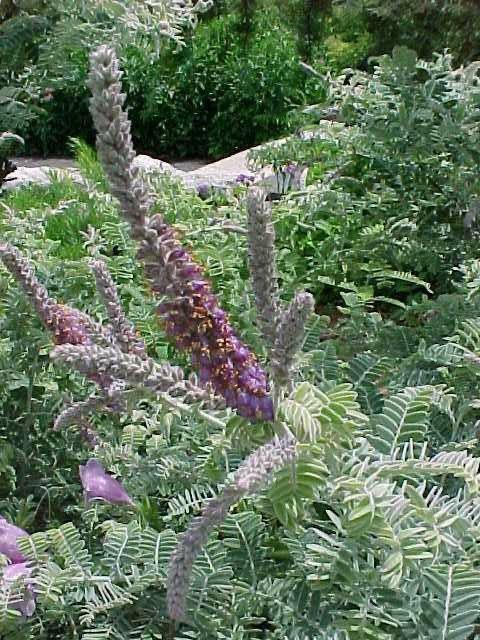
Lead Plant takes several years to mature, but it’s well worth the wait! It blooms in early summer, sending out dusky lavender spikes that erupt from bottom to top with bright purple blossoms. Each tiny, tubular flower spits out orange stamens, creating a unique and spectacular floral display that floats above delicate-looking, silvery green foliage.
Amorpha canescens prefers full sun but will tolerate part shade. However, it tends to sprawl and produces fewer flowers in partial or deep shade. This hardy plant will thrive in any medium to dry soil, unfazed by sand, gravel, loam, or clay. Deep roots, sometimes reaching 15 feet into the earth, enable Lead Plant to survive prairie fires and times of drought. It may die back to the ground after an extremely harsh winter, but will usually recover within a growing season or two. The plant’s tough roots made pioneer plowing difficult, causing early Settlers to dub it “Devil’s Shoestrings.” Other speculative accounts about the common name, Lead Plant, credit the dusty, gray hue of the foliage or an old belief that the plant’s presence was an indicator of sub-surface lead ore.
Lead Plant is one of the larval hosts of the Dog Face Sulphur, also known as Southern Dogface. It will also attract abundant bees, butterflies, moths, beetles and other beneficial insects. It is generally deer-resistant once established, but rabbits, deer, and other grazing animals may browse on it during its establishment years, so it may need extra protection early on. Lead Plant can be late to show signs of life in the spring, especially in northern climates. Leaves could emerge from woody stems, but you could also see new growth from the base of the plant.
Species of genus Amorpha are legumes. Most legume species harbor beneficial bacteria called rhizobia on their roots. Genus-specific strains of this bacterium called inoculum can aid in the fixation of atmospheric nitrogen and improve long-term health of native plant communities. Inoculum is naturally-occurring in most soils and additional amendment is usually not needed. However, in low fertility soils it may be necessary. Genus-specific strains are available at prairiemoon.com/inoculum
Specifications
- Seeds/Packet: 150
- Seeds/Ounce: 16,000
- Germination Code: C(10) J I
- Life Cycle: Perennial
- Sun Exposure: Full, Partial
- Soil Moisture: Medium, Medium-Dry, Dry
- Height: 3 feet
- Bloom Time: June, July, August
- Bloom Color: Purple
- Advantages:
- Plant Spacing:
1-2′
- Catalog Code:
AMO02T