Specifications
- Common Name: tickseed
- Type: Herbaceous perennial
- Family: Asteraceae
- Native Range: Central United States
- Zone: 3 to 8
- Height: 1.50 to 2.50 feet
- Spread: 1.00 to 1.50 feet
- Bloom Time: May to July
- Bloom Description: Yellow
- Sun: Full sun
- Water: Dry to medium
- Maintenance: Low
- Suggested Use: Naturalize
- Flower: Showy, Good Cut
- Attracts: Butterflies
- Tolerate: Deer, Drought, Dry Soil, Shallow-Rocky Soil
Culture: Easily grown in dry to medium moisture, well-drained soil in full sun. Thrives in poor, sandy or rocky soils with good drainage. Tolerant of heat, humidity and drought. Prompt deadheading of spent flower stalks encourages additional bloom and prevents any unwanted self-seeding. Spreads by rhizomes and self-seeding, and in optimum growing conditions will naturalize to form large colonies. Plants may be cut back hard in summer if foliage sprawls or becomes unkempt. If grown in borders, division may be needed every 2-3 years to maintain robustness.
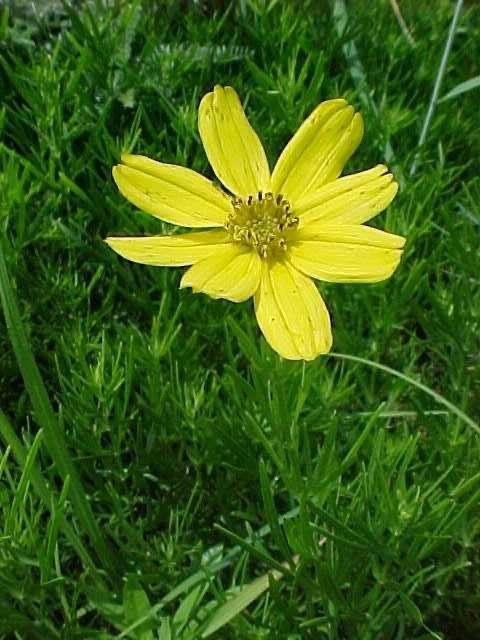
Noteworthy Characteristics: Coreopsis palmata, commonly called prairie coreopsis, stiff coreopsis and prairie tickseed, is a rhizomatous Missouri native wildflower which typically grows to 2.5′ tall and is commonly found in prairies, glades and dry open woods throughout the State. Features pale yellow, daisy-like flowers (1-2″ diameter) with eight yellow rays (mostly untoothed at the tips) and flat yellow center disks. Ray flowers are a distinctly paler yellow than most other native species of coreopsis. Flowers bloom atop stiff, upright stems from spring to mid-summer. Basal leaves are absent. Opposite, sessile stem leaves with pronounced veining are divided into three narrow lance-shaped segments which do not cut to the leaf base.
The genus name comes from the Greek words koris meaning “bug” and opsis meaning “like” in reference to the shape of the seed which resembles a bug or tick.
Specific epithet means like a palm with lobes like fingers in reference to the leaves.
Problems: No serious insect or disease problems. Tends to sprawl, particularly if grown in moist and/or fertile soils. Crown rot may occur if grown in moist, poorly drained soils.
Garden Uses: Best naturalized in native wildflower gardens, rock gardens, meadows or prairies. Good plant for areas with poor, dry soils. Can be effective in borders, but spreading tendencies must be kept in check.