Specifications
- Common Name: windflower
- Type: Herbaceous perennial
- Family: Ranunculaceae
- Native Range: Western United States
- Zone: 4 to 7
- Height: 1.00 to 2.00 feet
- Spread: 0.75 to 1.50 feet
- Bloom Time: June to July
- Bloom Description: Greenish-white
- Sun: Full sun to part shade
- Water: Dry to medium
- Maintenance: Low
- Suggested Use: Naturalize
- Flower: Showy
- Attracts:
- Tolerate: Drought, Dry Soil
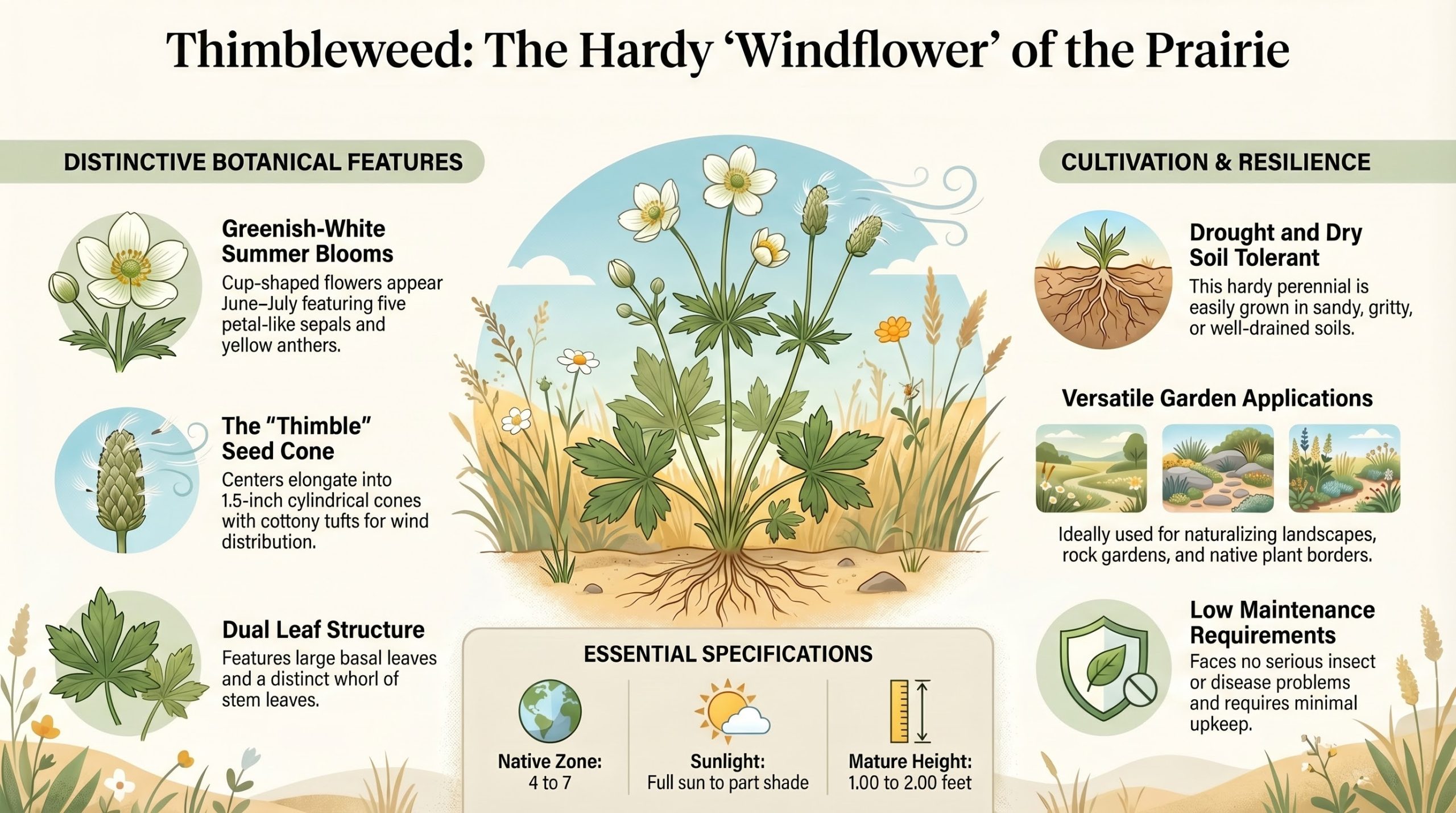
Culture: Easily grown in sandy or gritty, dry to medium, well-drained soils in full sun to part shade. Established plants tolerate drought.
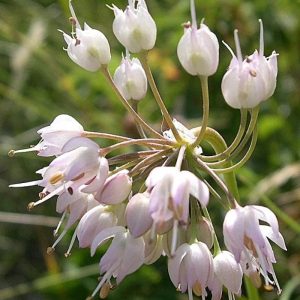
Noteworthy Characteristics: Anemone cylindrica is an upright herbaceous perennial that features an attractive late spring (June-July) bloom of cup-shaped, greenish-white anemone flowers (to 3/4 across), each having five petal-like sepals and a thimble-like center containing numerous stamens with yellow anthers. Thimbleweed typically grows to 1-2′ tall. Each plant contains two types of palmate compound deeply lobed leaves: large basal leaves (to 4″ wide) and a whorl of smaller stalked stem leaves located 1/2 way up the stem. Naked flower stalks rise upward from the leaf whorl, each stalk containing a single flower.
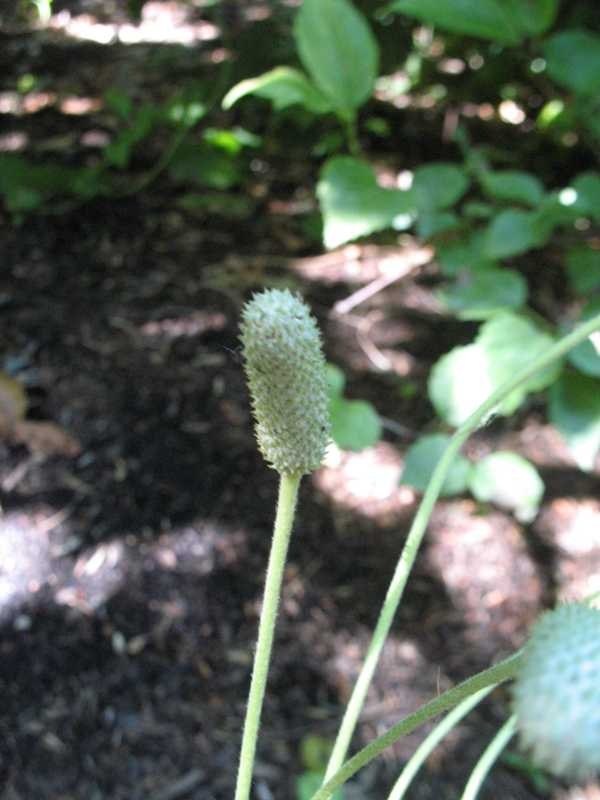
After bloom, the center cone of each flower elongates into a cylindrical cone (to 1 1/2″ long) as the seed begins to develop. Mature cones contain tiny dark brown seeds attached to cottony tufts which facilitate distribution of the seed by the wind (anemone from Greek means wind). Species plants are easily distinguished by these long cylindrical seed cones which have given rise to a large number of common names including thimbleweed (thimble-shaped cone), long-fruited anemone (long cylindrical cone) and candle flower (candle-shaped cone). This wildflower is native to prairies, dry open woods, slopes, limestone glades, pastures and roadsides throughout southern Canada south to New Jersey, Illinois, Missouri and Arizona. It is uncommon in Missouri where it is found in dry open loess hills, loess prairies and dry open wooded hills in four counties in the far northwestern part of the State (Steyermark).
Genus name is often said to be derived from the Greek word anemos meaning wind.
Problems: No serious insect or disease problems.
Garden Uses: Borders and rock gardens. Native plant gardens.